The reading room
The 20 best NBA books of all time
Three years after Portland won the title, David Halberstam followed the Blazers through a losing season. Our bookshelf begins with the men who were still there.
On the shelf
Choose a cover to read its essay.
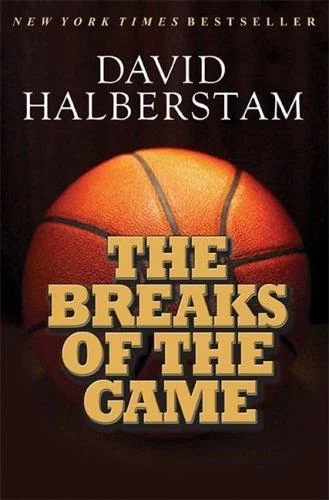
- 01 The Breaks of the Game
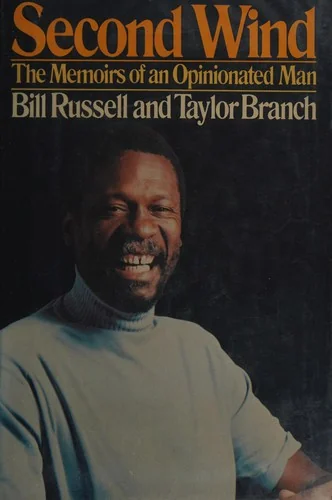
- 02 Second Wind
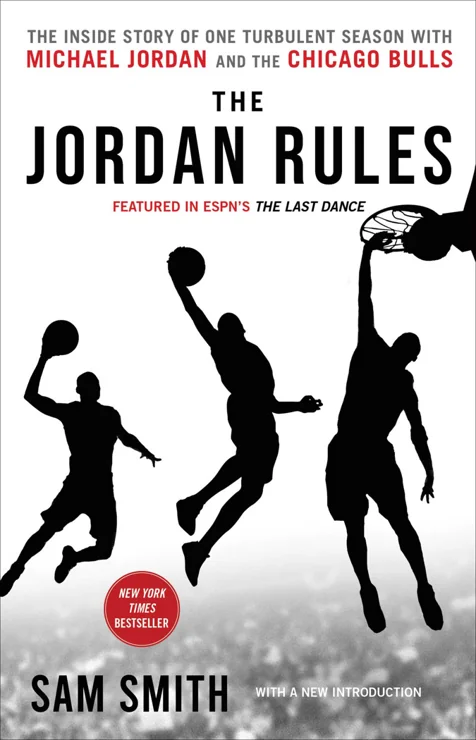
- 03 The Jordan Rules
 04 Loose Balls
 05 The City Game
 06 Seven Seconds or Less
 07 Foul! The Connie Hawkins Story
 08 The Book of Basketball
 09 Life on the Run
 10 Basketball on Paper
 11 Showtime
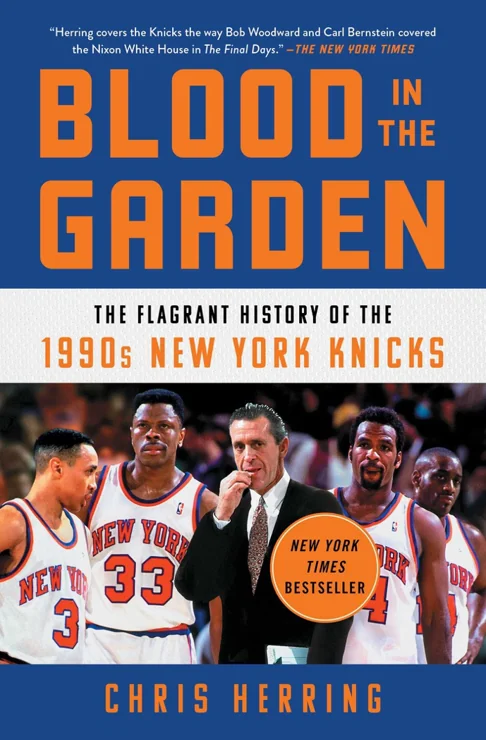 12 Blood in the Garden
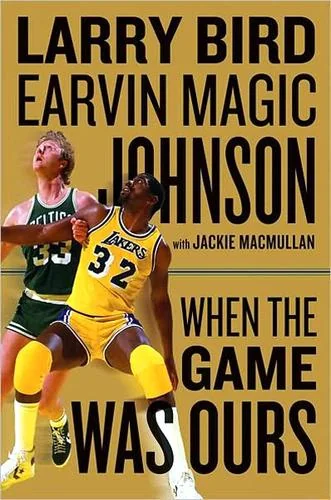 13 When the Game Was Ours
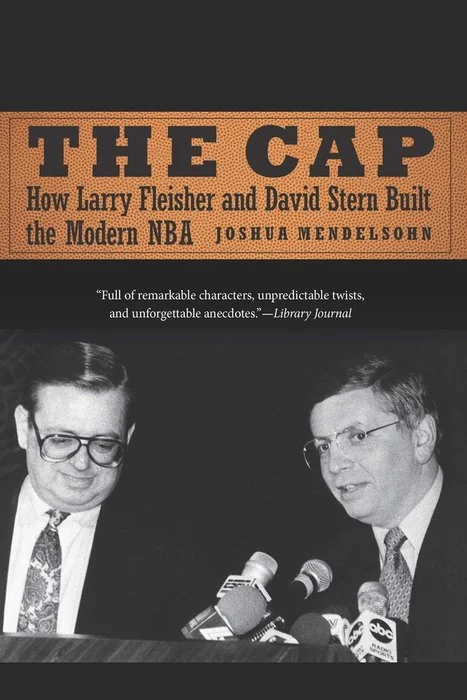 14 The Cap
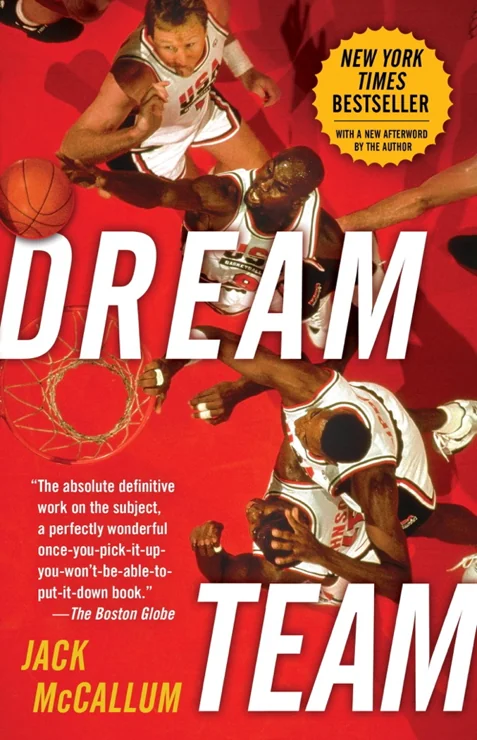 15 Dream Team
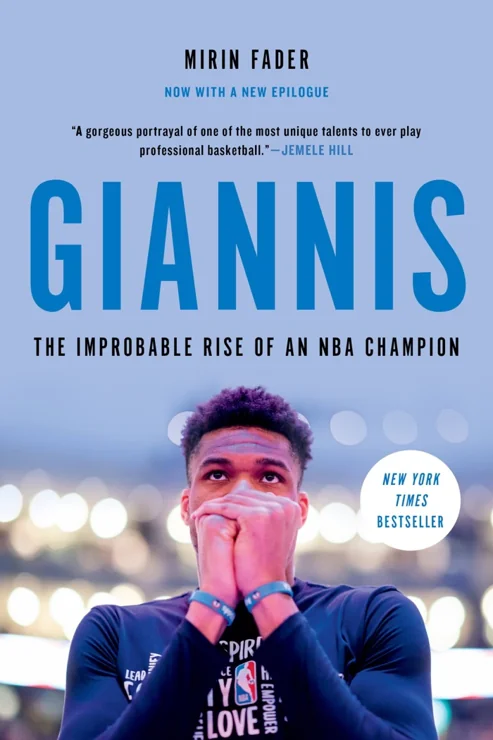 16 Giannis
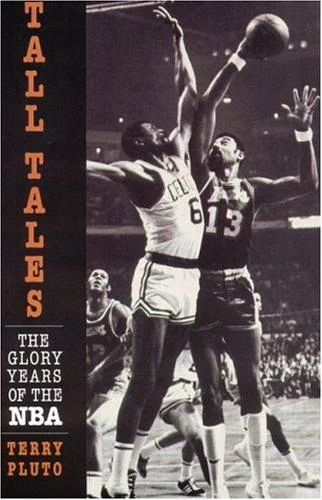 17 Tall Tales
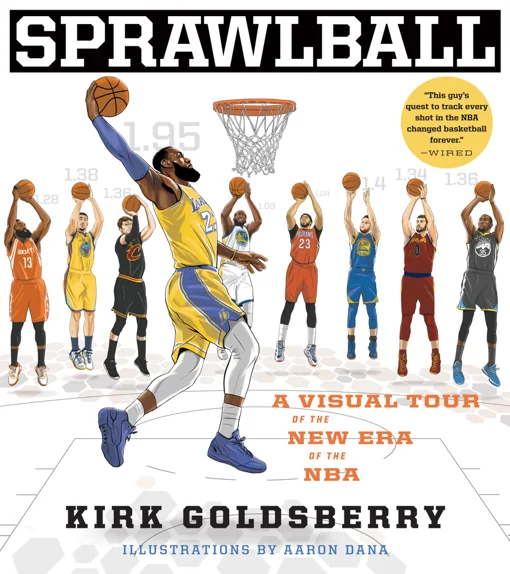 18 SprawlBall
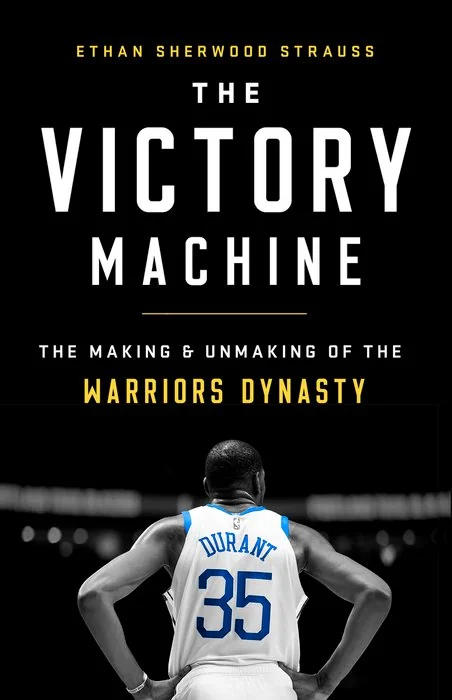 19 The Victory Machine
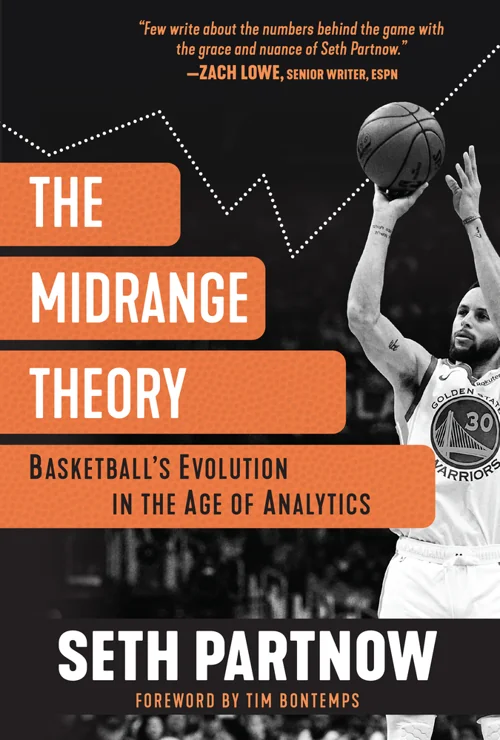 20 The Midrange Theory
-
The Breaks of the Game
In 1977 the Portland Trail Blazers won a championship playing a kind of basketball that made the city feel it knew these men. You could see the evidence of their affection, or thought you could, in how readily each man gave up the ball. David Halberstam came to Portland two seasons later. By then Bill Walton had hurt his foot, lost faith in the people treating it and left town. Maurice Lucas, who had helped deliver that championship, had a salary he considered a poor return for the favor. The old films still showed five men playing beautifully together. They gave no hint of what one man owed another once the game was over.
Late in the season a guard named Billy Ray Bates came up from the Continental League. He had grown up poor in Mississippi and gone largely unseen by NBA scouts. In his first three playoff games he averaged twenty-five points. For some of the veterans in Halberstam’s company, Portland had become a place of considerable grievance. For Bates it was the place that finally let him play. Halberstam gives both feelings their due. It’s why this book leads the list. After spending a season with these Blazers, you can understand a man for wanting out of Portland and another for wanting nothing in the world quite so much as to get there.
Portland · Regular season The team Halberstam inherited
491976–77NBA champions581977–78451978–79381979–80Season in the bookWins in an 82-game season · Franchise records ↗
-
Second Wind
As a boy in Oakland, Bill Russell would study a painting in a library book, close the book and try to draw it from memory. The shape came back to him. Some detail was invariably wrong. Years later, still a raw basketball player, he discovered that he could call up the image of a move another man had made. On successive passes through it he could recover the position of the ball, the turn of the head, the order in which the feet had moved. Eventually he could put himself into the picture. By the time an opponent tried the move against him, Russell had already played him.
An opponent might reasonably have concluded that Russell had quicker reflexes. In a way that’s the problem the whole memoir addresses. People spent his career telling him what they could see in him, in his body, in his bearing toward Boston, in his obligations as a famous Black athlete. Russell, writing with Taylor Branch, has his own account of what went on inside his head. The pages on learning to defend are reason enough to take his version seriously.
-
The Jordan Rules
Michael Jordan was in Atlantic City for the Tyson–Spinks fight when reporters asked what he thought of Chicago trading Charles Oakley. That was how he learned that the Bulls had sent his friend to New York for Bill Cartwright. Cartwright came to Chicago to do a job for which the general manager had acquired him. He also had to answer, virtually every time Jordan looked at him, for the absence of a man he’d had no part in trading.
Sam Smith covered the Bulls for the Chicago Tribune. He understood the basketball merits of having a true center. He also understood that Phil Jackson could draw up a play for Cartwright and still depend on Jordan’s willingness to throw him the ball. That small gap between the coach’s authority and the star’s makes this the best book on Jordan’s first championship. Smith gives Cartwright, Horace Grant and the other men who shared the floor enough room to have perfectly legitimate interests of their own. Winning settled the question of whether they could play together. It settled remarkably little else.
-
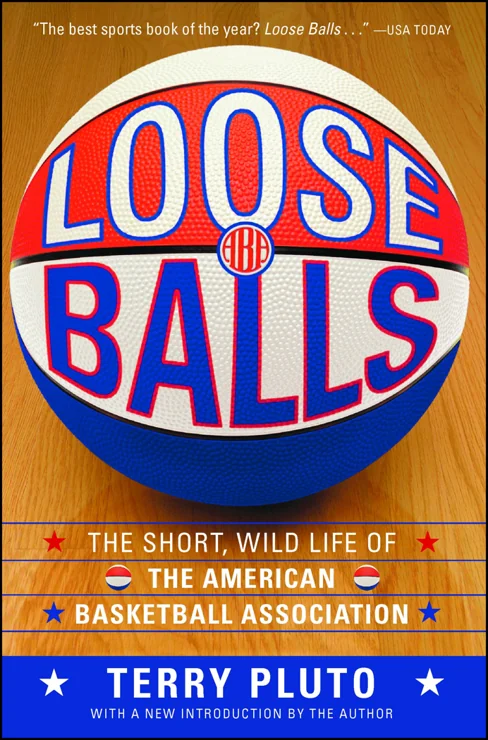
Loose Balls
To the NBA owner who held a player’s rights, there was something decidedly unfunny about the American Basketball Association. Rick Barry was prepared to go play in it. Suddenly an owner who had been able to tell a star what he was worth had to consider what a second employer might pay. A league could have serious trouble meeting its own payroll and still do an extraordinary service for a man negotiating his next contract across town.
Terry Pluto tells the history of the ABA by handing it over to the people who ran it, sold it, broadcast it and tried to make a living in it. The men charged with getting people into the building have a rather different idea of a successful evening from the men who had to guard Julius Erving. Both get to talk. Plenty of what they describe sounds preposterous, including the idea that the NBA might one day want anything to do with these people. Denver, Indiana, San Antonio and the Nets are still playing.
-
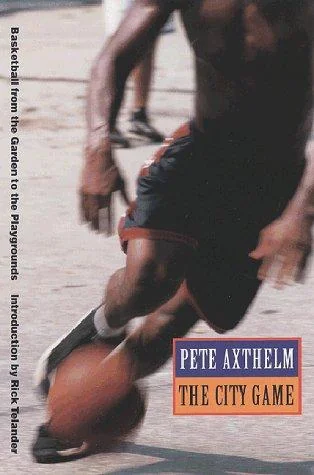
The City Game
New York had two sets of basketball historians in 1970. One could consult newspaper files for the scoring record of practically any game Willis Reed had played. The other could tell you what Earl Manigault had done on a Harlem playground, provided you could find somebody who was there. Pete Axthelm took both kinds of testimony seriously. While the Knicks were winning the first championship in franchise history, he went looking for men whose reputations traveled as far as a story could travel by word of mouth.
Alexander Wolff later observed that the championship gave Axthelm a way to get the playgrounds into print. The arrangement works in the other direction, too. After the chapters on Manigault, it feels like an astonishing piece of good fortune that Walt Frazier’s best nights happened in a building where somebody got paid to write down what he did. This is a short book about a single city with an unusually long reach. It leaves you wondering whom the record has left out in yours.
-
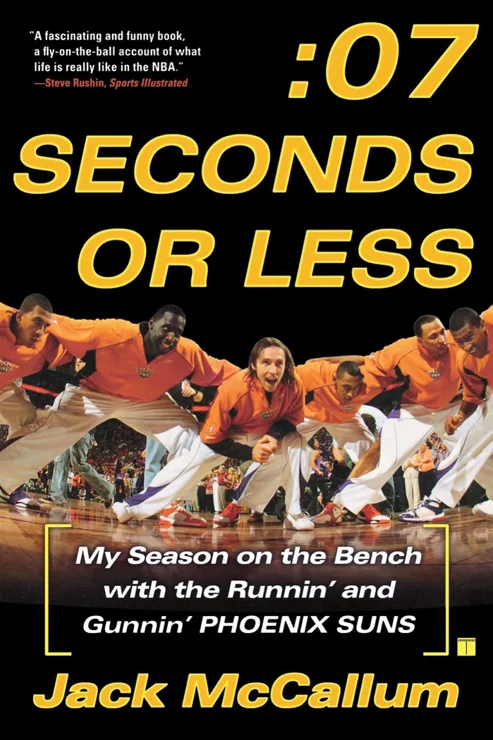
Seven Seconds or Less
During the 2006 playoffs, Phoenix assistant coach Marc Iavaroni asked Boris Diaw why he should be on the floor for overtime. Diaw offered no answer that Jack McCallum could record. He sat. Watching from home, you could have spent the rest of the evening discussing the basketball considerations behind that substitution without ever arriving at the rather important fact that the player himself had been invited to make the case.
McCallum got to travel with Mike D’Antoni’s Suns and attend the staff meetings. What he did with the privilege was listen to people at work. The Suns’ early offense looked especially simple when Steve Nash was running it. From the bench you can hear how much coaxing it took to get a shooter deep enough into the corner, and how tempting it was, after an opponent erased a lead, to abandon the pace that had produced the lead in the first place. For anyone coming to this list from Halberstam, McCallum offers the closest thing to another season spent in a team’s company.
-
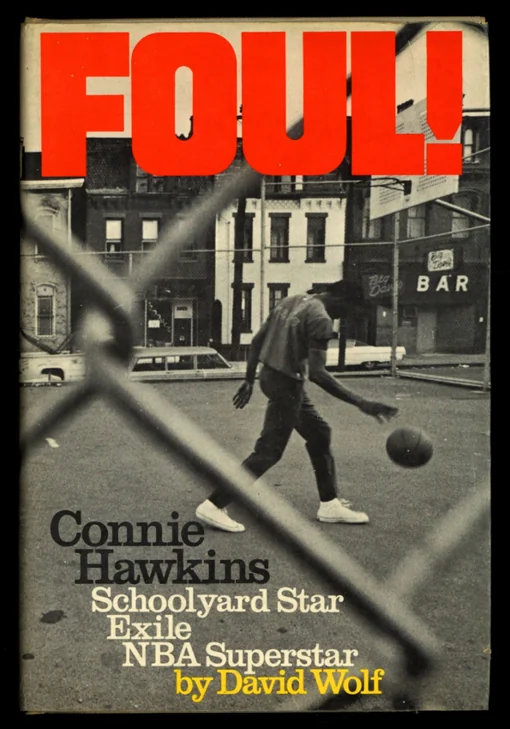
Foul! The Connie Hawkins Story
Connie Hawkins was twenty-seven when he played his first NBA game. A reader coming across his name in an old Phoenix box score could be forgiven for assuming that this was how long it had taken him to get good enough. People who had seen him in Brooklyn could have corrected that impression years earlier. So could the men who played against him in the ABA. The NBA had kept him out after his name surfaced in a college point-shaving investigation. He had never been charged.
David Wolf pursued a question that can get lost surprisingly quickly once enough institutions agree about a man. What, precisely, had Hawkins done? His reporting for Life helped bring the case before a public that had little reason to know a case existed. The book gives Hawkins back some of the record he lost while he was traveling with the Globetrotters and playing wherever a league would have him. A settlement could finally get him onto an NBA court. Nobody could arrange for him to arrive there at nineteen.
-
The Book of Basketball
Bill Simmons proposes demolishing the arrangement by which everyone in the Basketball Hall of Fame enjoys more or less the same address. He would give the place floors. A visitor would climb past very good players on the way to great ones, with the exact altitude of a particular Laker or Celtic determined by the proprietor. The idea is funny for about a minute. Then you discover a player you love on the wrong floor and realize you have agreed to spend the afternoon in Bill Simmons’s building.
The most revealing dispute concerns Wilt Chamberlain and Bill Russell. There is a substantial numerical case for Wilt and an even more substantial pile of championships on Russell’s side. Simmons wants to know which of the things Russell did for a team can survive translation into an individual ranking. He has Boston loyalties, a prodigious memory and no particular instinct for ending a joke while it’s ahead. You’ll want all three taken into account before accepting his verdict. A good portion of the fun lies in using his own criteria to move somebody up a floor.
-
Life on the Run
Bill Bradley and Dave DeBusschere were roommates on the road. That modest fact helps explain the kind of evidence Bradley has about the Knicks. A reporter could watch DeBusschere work for a rebound. Bradley could also watch what happened to him through the long hours before they got to do it again. Twenty days of the season supply the frame for a book drawn from years of keeping a journal. Childhood and old games keep coming back, much as they do when you have sat beside the same man on enough buses.
There is a terrible episode involving Earl Monroe. Thousands have cheered him at Madison Square Garden. Barely an hour later he is beaten outside it. Bradley includes both incidents in his account of the job. The old Knicks have been generously served by writers who remember how good it felt to be in the building. Bradley is particularly good company for the walk out.
-
Basketball on Paper
Suppose a guard throws a pass under the basket and his center catches it alone for a dunk. Now give the same guard an ordinary pass to that same center twenty-five feet out, where, to everyone’s surprise, he makes the shot. The official scorer can award an assist on each play. In the first case the guard has done much of the work of producing the basket. In the second he has had the good fortune to be the last person who touched the ball before something improbable happened.
Dean Oliver took distinctions like that seriously enough to try to do the arithmetic. He starts with a possession, follows what a team makes of it, then tackles the considerably harder business of dividing the result among the participants. His assumptions are open to inspection. You can object to the share a passer gets and point to exactly where you’d change it. That makes this book unusually durable. Even a reader who skips the equations will have a harder time giving two players equal credit simply because the scorekeeper had only one column.
-
Showtime
Ask who coached the Showtime Lakers and almost anybody will say Pat Riley. Jeff Pearlman spends some of his best pages on Jack McKinney. He was the coach when Magic Johnson arrived in 1979, and he wanted a team that could move the ball ahead by passing it before the defense had time to organize. A bicycle accident took him off the bench. His assistant Paul Westhead took over and won a championship. By the time Riley got the job, three coaches had had a hand in what came to seem the natural expression of one man in a very good suit.
Pearlman interviewed nearly three hundred people for this history. The abundance suits a team on which Jerry Buss, Kareem Abdul-Jabbar and a rookie point guard all had rather different ideas of who was running things. The delightful surprise in a book about so many famous people is how often a less famous one turns out to have made the consequential decision.
-
Blood in the Garden
Chris Herring opens at Pat Riley’s first Knicks practice. About twenty minutes in, Anthony Mason and Xavier McDaniel are fighting. A coach trying to establish how much contact he expects his players to tolerate now has a practical problem. Two men appear to have taken him at his word. The timing matters. Herring has put the reader there early enough to see a style of basketball being negotiated by the people who will have to absorb the blows.
The Knicks of the nineties could be hard to watch, especially if you had come to see the other team run its offense. Herring spoke to more than two hundred people to recover what it took to play that way and why New Yorkers loved watching it. He gives the same attention to a team that fell short of a title that championship teams routinely receive. Read it alongside Pearlman’s Lakers history. It takes some reconciling, the coach who turned Magic loose in Los Angeles and the one who set Charles Oakley to work in New York.
-
When the Game Was Ours
In the summer of 1985, Converse brought Magic Johnson to Indiana to make a shoe commercial with Larry Bird. By then they had played each other for an NCAA title and for NBA championships in Boston and Los Angeles. A shoe company looking to sell the country a picture of a rivalry gave the two participants something years of competition had failed to supply. They had a chance to eat lunch and talk.
Jackie MacMullan gets to tell that history with both men. Neither has much trouble recalling the defeats. An accomplishment that one man remembers with pleasure can still register, in the other man’s account, as a particularly bad night at work. Their testimony grows more valuable as the rivalry recedes, Bird plays through pain and Johnson learns he has HIV. The selling proposition for the book is that these two great players knew one another better than anybody understood. The more interesting discovery is how much they had once managed to mean to one another while scarcely knowing each other at all.
-
The Cap
When Bob Cousy began taking up other NBA players’ grievances, his qualifications included the fact that he was Bob Cousy. A club owner had reasons to return his call that did not apply to the last guard on the bench. Joshua Mendelsohn follows the long effort to turn that personal advantage into something a player could depend on even when there was no Celtic star handy to do him a favor.
The crucial negotiations came in 1982–83. The owners wanted a ceiling on what teams could spend. In return, the players obtained a claim on a share of league revenue. For a union negotiator, the value of that concession depended on what the league might become. Larry Fleisher had to bargain on behalf of men with short careers, some of whom would be out of basketball before the revenue grew. Mendelsohn, a labor lawyer, takes the time to explain what each side could credibly demand. What sounds today like a simple limit on a general manager’s spending was once a union’s wager on the future of the sport.
-
Dream Team
The most closely examined game in Jack McCallum’s account of the 1992 Olympics took place before the tournament, in a gym in Monte Carlo, with Americans on both sides. Magic Johnson captained one team and Michael Jordan the other. There was no medal available. There was, however, the opportunity to beat Michael Jordan with a team he couldn’t reasonably describe as overmatched. That was incentive enough.
McCallum later got hold of the recording made by Chuck Daly’s videographer. He had the sound worked on and a box score compiled. As a result, the chapter has something beyond the recollections of famous men who would all understandably like to remember themselves playing well. You can follow a possession and hear what the players had to say about it. The Americans beat Croatia by thirty-two points for the gold medal. They could scarcely have asked more of an opponent in Barcelona than they had already asked of one another behind a closed door.
Barcelona · 1992 Olympics Eight games, eight double-digit wins
Angola+68116–48Croatia+33103–70Germany+43111–68Brazil+44127–83Spain+41122–81Puerto Rico+38115–77Lithuania+51127–76Croatia · Final+32117–85U.S. margin and final score · Olympic results ↗
-
Giannis
After Giannis Antetokounmpo signed a contract worth millions, he spent four hundred dollars on a PlayStation. The next day he took it back. Mirin Fader has done enough reporting in Athens by the time money becomes abundant in Milwaukee that the return trip to the store makes sense. As a child, Giannis sold goods on the street to help his family pay for things they needed that day. The purchase price of a game console could buy a great many of those things. Signing his name had changed what he could afford overnight. His sense of what things cost took longer.
Fader had limited access to Giannis himself. She spoke instead to more than two hundred people, among them people in Greece who knew the Antetokounmpos when no one had much reason to pay attention. Their recollections give the early chapters an advantage over the familiar draft story. In a scout’s account, the family comes into view when the boy becomes a prospect. In Fader’s, the scouts turn up fairly late in the family’s life.
-
Tall Tales
Fort Wayne, Rochester, Syracuse. To a young man weighing an offer to play professional basketball, these were once major-league destinations, and the offer might still leave him looking for a second job in the summer. Terry Pluto found players, referees, owners and coaches who remembered that league. They remember it with the proprietary air of people who did a good deal of the work required to keep it in business until the public took an interest.
Among Pluto’s witnesses is Danny Biasone, the Syracuse owner who helped get the twenty-four-second clock into the league. Elsewhere you hear from the men who had to learn to play at the speed he set. A referee remembers a different set of turning points from a leading scorer. One absence becomes more conspicuous the longer you read. Wilt Chamberlain has plenty to say. Bill Russell gives no testimony of his own. Read Second Wind on how he learned to play defense, then turn back to Wilt. A reader can put those two men into a conversation even Pluto couldn’t arrange.
-
SprawlBall
Stand just inside the three-point line in the corner and make a jumper. Move your shoes back a few inches and make it again. You have done almost exactly the same work and increased your return by half. For years this curious feature of the court was available to any coach with a tape measure. Kirk Goldsberry’s maps show what happened when an entire league began arranging its work around it.
Goldsberry trained as a cartographer. Before he mapped basketball he worked with flood data, and the useful instinct he brings from that trade is an interest in where something fails to appear. A table can tell you that three-point attempts went up. A map shows you the patches of floor that players had to vacate to take those extra threes. The pictures make room for a genuine disagreement. A coach can be entirely right to want the more valuable shot, and a spectator can miss the game people used to play in the space the coach has abandoned.
-
The Victory Machine
At a meeting to persuade Stephen Curry to stay with Nike, somebody left Kevin Durant’s name on a presentation slide. Ethan Sherwood Strauss reported the episode as part of the story of how Nike lost Curry to Under Armour. It makes an unexpectedly good introduction to his book on Golden State. A shoe executive could regard two famous clients as sufficiently alike to recycle the sales pitch. Each of those clients had spent a professional lifetime acquiring a name of his own.
Then Durant joined Curry’s Warriors. On the floor it was difficult to imagine a more generous arrangement for two scorers. Off it, the championships did little to resolve who belonged to the Bay Area, who was visiting, or why a man who had just won Finals MVP should care which player the crowd loved best. Strauss covered the team and figures in its disputes with the press. That proximity gives him access and a stake in the story. The scenes in which a player objects to how Strauss has written about him are worth reading with both things in mind.
-
The Midrange Theory
At an analytics conference, Stan Van Gundy heard that tracking cameras had established how many miles Paul George had run that season. The coach wanted to know what anybody was supposed to do with that information. It was a fair question. A mile spent chasing a shooter through screens and a mile jogging back after made baskets are each a mile to the camera. A coach deciding whether he needs a substitution would have good reason to distinguish them.
Seth Partnow, who ran basketball research for the Milwaukee Bucks, understands both people in that exchange. Someone had to do considerable work to obtain a measurement that used to be impossible. Somebody else still had to win a game that night. Partnow is good on the work between those two jobs, which includes finding language a coach can use and asking what alternatives a player actually had. A contested jumper with two seconds left on the clock looks considerably better once you consider the shot his team was otherwise going to get.